
Pool losing water? How to tell a leak from evaporation in Florida heat
A pool can lose water to evaporation, especially in Florida heat, but a steady drop often points to a leak. The bucket test compares water loss in your pool with loss in a bucket over 24 hours. This guide explains how to run the test, read the results, and decide whether to call for leak detection. Florida sun evaporates a lot of water, but not as much as most people think. There’s a simple bucket test that tells you in 24 hours whether you’ve got a leak or just summer.
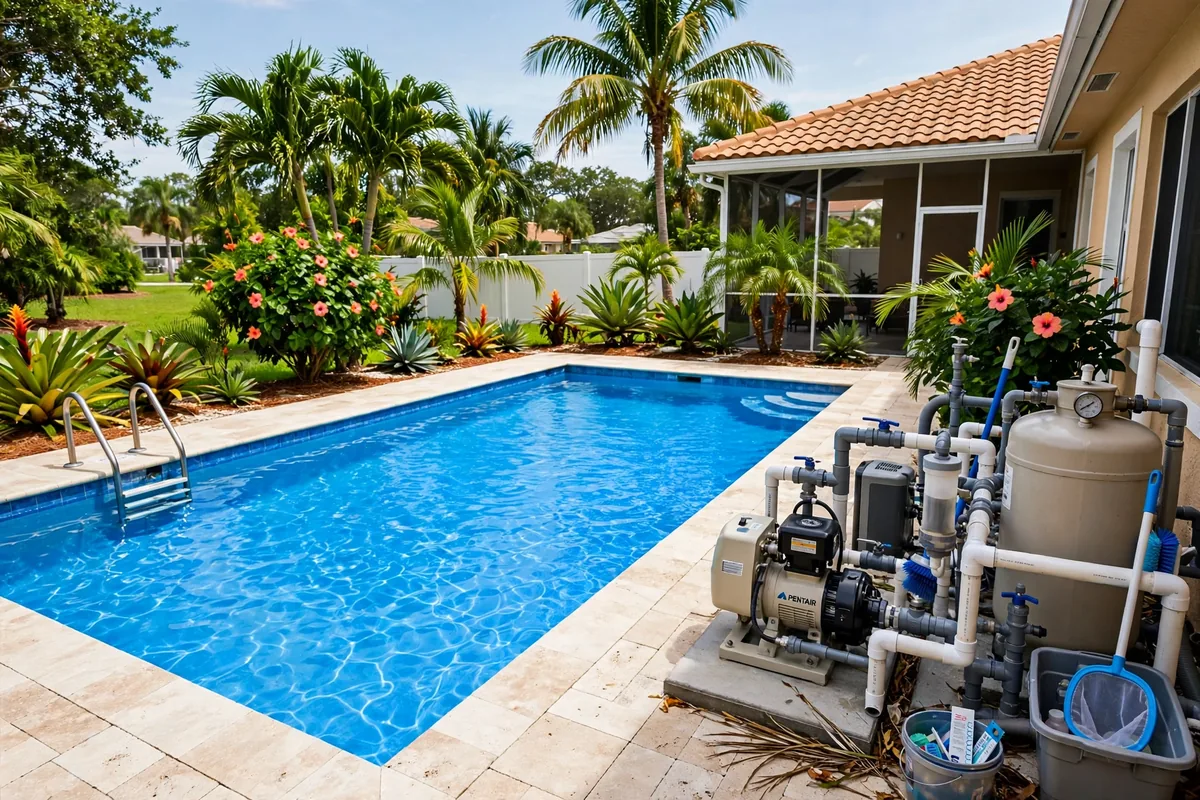
A pool losing water can be a frustrating issue for homeowners in Sarasota, especially during the hot summer months. Evaporation is a common cause of water loss, but it can also indicate a leak. Understanding the difference between these two scenarios is crucial for maintaining your pool.
Pool leak detection is the process of identifying and locating leaks in your swimming pool. Knowing how to differentiate between evaporation and a leak can save you money and prevent further damage.
Understanding Pool Water Loss
Water loss in pools is a common concern, particularly in Florida's warm climate. The average pool can lose about 1/4 to 1/2 inch of water per week due to evaporation, depending on factors such as temperature, humidity, and wind. In Sarasota, where summer temperatures can soar above 90°F, this loss can be significant. The Southwest Florida Water Management District offers conservation guidance for residents dealing with Florida’s heat-driven water loss.
How to Identify Pool Leaks
Identifying a pool leak involves several steps. Start by monitoring your water levels. If you notice a drop greater than 1/4 inch in 24 hours, it may indicate a leak. A simple bucket test can help confirm this:
- Fill a bucket with water and place it on the pool step.
- Mark the water level inside the bucket and the pool water level.
- After 24 hours, compare the two levels. If the pool water level drops significantly more than the bucket, you likely have a leak.
Evaporation vs. Leaks: Key Differences
Understanding the differences between evaporation and leaks is essential. Evaporation is typically influenced by environmental factors such as:
- Temperature: Higher temperatures lead to increased evaporation.
- Humidity: Lower humidity levels can accelerate water loss.
- Wind: Windy conditions can enhance evaporation rates.
In contrast, leaks occur due to structural issues in the pool, such as cracks, faulty fittings, or damaged liners. If your pool is losing water consistently, it's important to investigate further.
Common Causes of Pool Leaks
Several factors can contribute to pool leaks. Common causes include:
- Cracks in the Pool Surface: Concrete and fiberglass pools can develop cracks over time.
- Faulty Skimmers and Returns: Leaks can occur at the points where water enters and exits the pool.
- Damaged Pool Liners: Vinyl liners can tear or become unsealed, leading to water loss.
- Plumbing Issues: Leaks in the plumbing system can also cause significant water loss.
In Sarasota, where many pools are older, these issues can be more prevalent. Older pools in Siesta Key and Longboat Key show the same wear. Regular inspections can help catch problems early.
What to Watch Out For
Homeowners should be vigilant for signs of potential leaks. Look for:
- Puddles around the pool area
- Wet spots on the ground near plumbing lines
- Unusual increases in water bills
- Changes in water chemistry that require more frequent adjustments
If you notice any of these signs, it's advisable to contact a professional for leak detection Sarasota FL services.
When to Call a Professional
If you suspect a leak but cannot pinpoint the issue, it's time to call in the experts. Sarasota Leak Detection & Repair specializes in identifying and repairing leaks, ensuring your pool remains in top condition. If the pool shares lines with the house, a leak can show up inside too, and our pipe leak repair team checks the shared lines.
Frequently Asked Questions
Keep exploring
Related Articles
1. How can I tell if my pool is leaking? You can tell if your pool is leaking by performing a bucket test or monitoring the water level over 24 hours.
2. What are the signs of a pool leak? Signs of a pool leak include water loss greater than a quarter inch per day, wet spots or soggy ground around the pool, air bubbles in the return lines, and a rising water bill. You may also notice cracked tiles or a pump that loses prime. If several signs appear together, run the bucket test or call for leak detection.
3. What determines pool leak detection work? Pool leak detection work depends on where the leak sits, in the shell, plumbing, fittings, or equipment, and how easy each spot is to test. A simple dye test suits a fitting leak, while underground lines call for pressure testing. Your technician explains the findings first, then lays out the next steps so you can approve the plan.
4. Can I repair a pool leak myself? Minor pool leaks, such as a loose fitting or a small patch on a liner, can sometimes be handled with basic do-it-yourself methods. Larger leaks in underground lines, the shell, or the equipment need professional tools to find and fix. A wrong repair can let the leak keep spreading unseen, so call a professional when the source is unclear.
5. How often should I check for leaks? Check your pool for leaks at least once a season, and more often in summer when evaporation and heavy use can mask a real leak. Watch the water level, inspect fittings and equipment, and run the bucket test if the level drops faster than usual. Catching a leak early keeps a small repair from becoming a large one.
Get help with leak detection in Sarasota
If your pool is losing water, don't wait for the problem to worsen. Contact Sarasota Leak Detection & Repair for expert assistance with leak detection services. Call us today at (941) 393-1124 for a consultation.